
How Is the Fall Alert Server Managed? Photos Handled in Turn, Clothing Instead of Faces
The nursing home fall alert AI robot's photos are gathered on a server where AI judges them. This post covers how we reinforced processing so photos are handled in turn even when many arrive at once, and our research into telling staff from residents by clothing rather than faces.
We reinforced processing so that photos are handled in turn and the system does not stop, even when many arrive at once. And we are researching a way to tell staff from residents by clothing to reduce unnecessary alerts.
After features, the next thing people evaluating the nursing home fall alert AI robot ask is "Who manages the side that sends the alerts, and how?" This post covers the server that works behind the robot you can see.
Where do photos go to be judged?
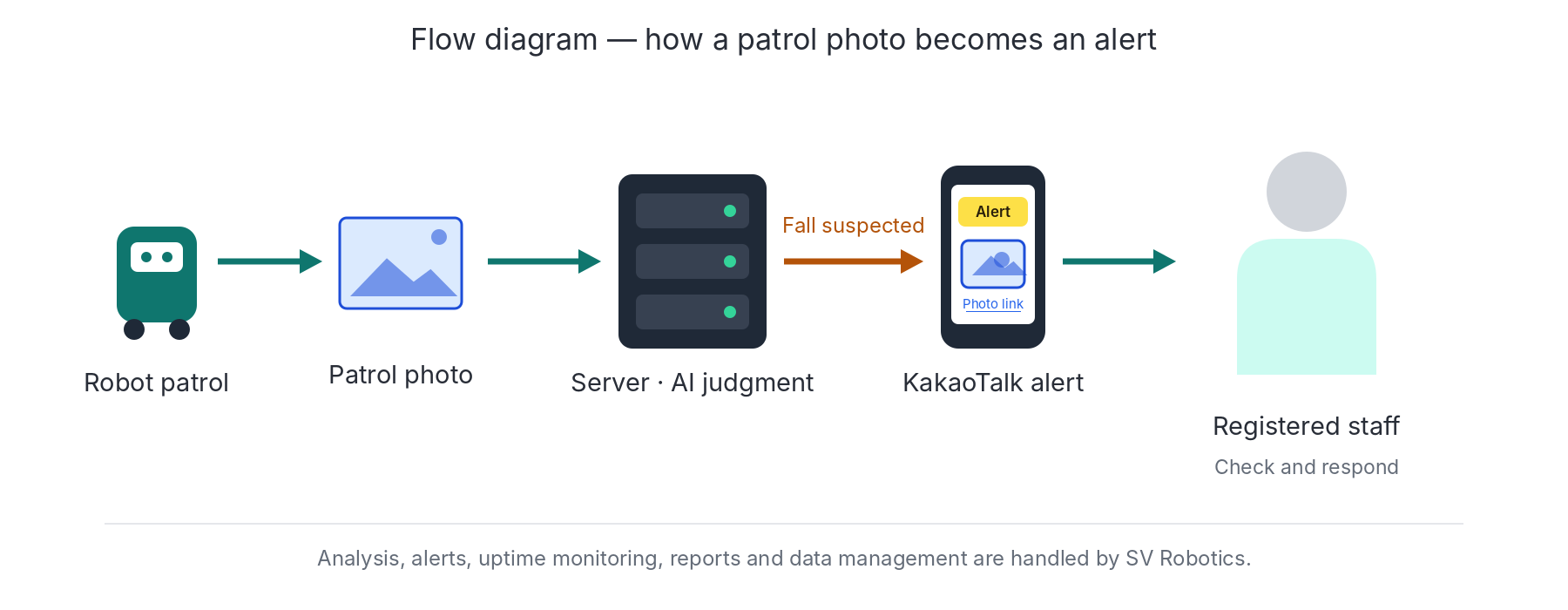
The AI judges the photos the robot takes while on patrol. If the judgment finds a fall candidate, an alert goes out.
We notify you by KakaoTalk notification (Alimtalk). A link for viewing the detection photo goes with the Alimtalk. The delivery time once a fall is detected is within 30 seconds.
Who manages the server?
Analysis, alerts, uptime monitoring, reports and data management are handled by SV Robotics.
SV Robotics watches the server's condition and keeps making the reinforcements it needs.
We also make clear what the facility handles. Registering staff, entering work schedules and receiving alerts are done by the facility. During hours when no staff member is registered in the schedule, alerts are not delivered.
What happens when many photos arrive at once?
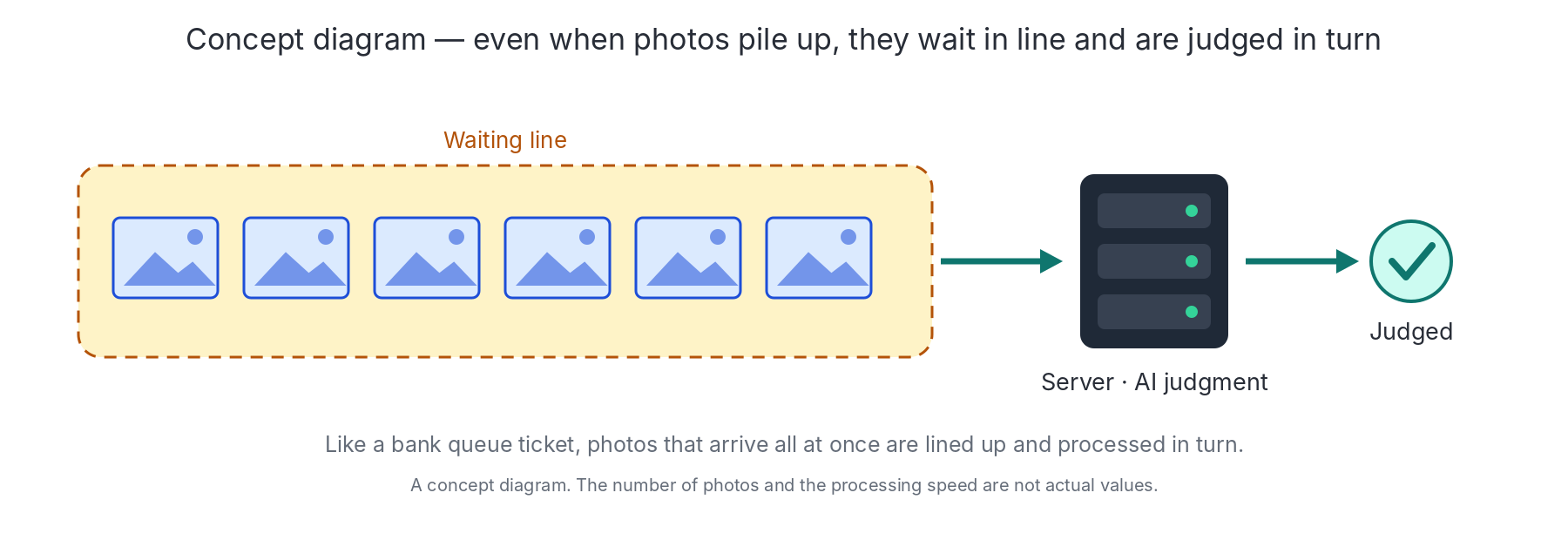
We reinforced processing so that photos are handled in turn and the system does not stop, even when many arrive at once.
Think of the number ticket at a bank. Even when customers arrive all at once, if they take a ticket and queue, the counter handles them one after another. The server likewise lines up the incoming photos and judges them in turn.
Do staff photos trigger alerts too?
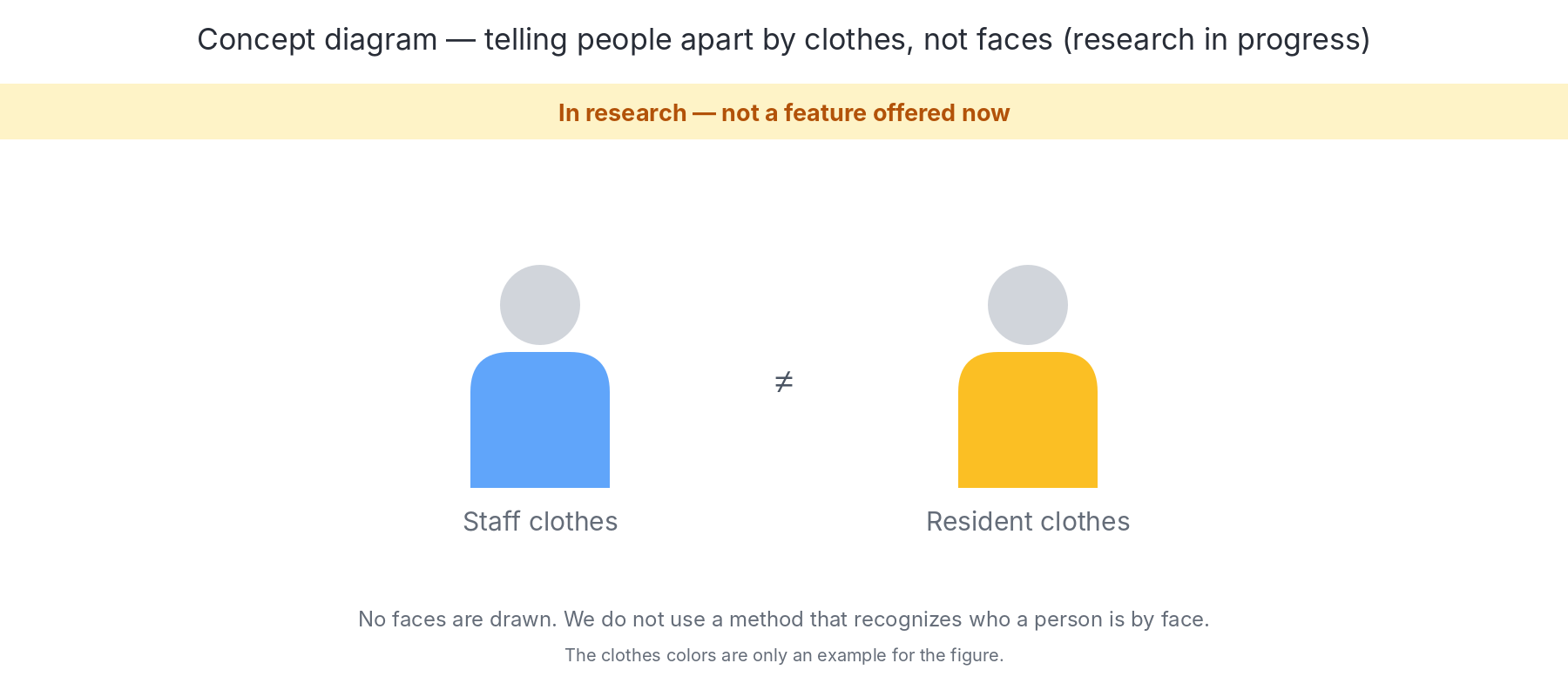
The AI finds people in photos. That makes it important to tell staff from residents. We are researching a way to tell staff from residents by clothing to reduce unnecessary alerts. We do not use any method that recognizes who a person is by their face.
This distinction is still in research and is not a feature we offer today. We chose clothing instead of faces because it is a method that works without recognizing who a person is.
Who makes the judgment after an alert arrives?
It makes no medical judgment. Checking and responding are done by staff.
It does not prevent falls. It is an aid that helps staff notice quickly after someone has fallen.
Frequently asked questions
Does the facility need to manage the server separately?
Analysis, alerts, uptime monitoring, reports and data management are handled by SV Robotics. Registering staff, entering work schedules and receiving alerts are done by the facility.
Do alerts stop if many photos arrive at once?
We reinforced processing so that photos are handled in turn and the system does not stop, even when many arrive at once.
Do photos showing staff trigger alerts too?
We are researching a way to tell staff from residents by clothing to reduce unnecessary alerts. It is still in research and is not a feature we offer today.
Does it recognize people by their faces?
We do not use any method that recognizes who a person is by their face.
How do we receive alerts?
We notify you by KakaoTalk notification (Alimtalk). A link for viewing the detection photo goes with the Alimtalk.
Next step
You can see first how an alert actually arrives in a remote demo. If you are curious about server management and what the facility will handle, please ask during the demo.
Sources: SV Robotics nursing home fall alert AI robot product guide (photo judgment, alert method, division of roles, server reinforcement, clothing-distinction research; checked 2026-10-02).